Education / 11 min read
Türkiye Bursları: the next scholarship call, explained
Eligibility, documents and the free TBBS application for the next Türkiye Bursları call, and what to do if you are not selected.
TürkiyeRota Journal · General information
A government scholarship, filed by the student
Türkiye Bursları, Türkiye Scholarships in English, is the Republic’s scholarship for study at a Turkish university. YTB, the Presidency for Turks Abroad and Related Communities, has run it under that name since 2012. You file it yourself on TBBS.
This page is for Iranian, Afghan and other foreign applicants watching the next general call. It was written on 24 October 2026 from the programme’s own pages. It is general information, not an offer. A self-funded place is a different procedure, in Applying to Turkish universities as an international student in 2026. Education in Türkiye is where TürkiyeRota helps you compare programmes. The scholarship decision stays with the programme.
The account is yours. The TBBS sign-in screen, read that day, says signing up is free and that one registration is enough. YTB’s international-students page says applications are online and free of charge. TürkiyeRota does not submit this form. Paying someone to “send” it is not the channel those screens describe. A sworn translation, or a self-funded plan, is a separate request, made after you know which office has asked.
Who the criteria page allows, by level
The criteria page, read on 24 October 2026, sets the floors below. It does not print the day age is counted, or a conversion from a 20-point or 4-point scale. If an Iranian or Afghan transcript is out of 20, keep that average on the scan and enter what the form asks that year. Do not invent a percentage.
Citizens of every country may apply, as may researchers and academics, if they have already graduated or will graduate before August of the academic year then running. Iranian and Afghan passports are not excluded. Turkish citizens, and anyone who has lost Turkish citizenship, are out, second passport or not. So is a student already enrolled in Türkiye at the same level. A bachelor’s student there can still read the master’s lines.
The full-time programmes page, read the same day, separates the levels. Associate study is two vocational years. Bachelor’s study includes health sciences. Master’s and doctoral scholarships on that page do not, so 90 percent does not fund a medical graduate degree. Art awards use the same dates and only named departments at Ankara Music and Fine Arts University, Ankara Hacı Bayram Veli University and Istanbul Technical University. Choose only what the screen offers.
- Associate and bachelor’s: at least 70 percent, and under 21.
- Master’s: at least 75 percent, and under 30.
- Doctorate: at least 75 percent, and under 35.
- Medicine, dentistry and pharmacy: at least 90 percent, only at a level the programme offers.
- Research scholarship: under 50, and not on the January call.
What an award covers, as those pages stated it
The why page and the full-time page, both read on 24 October 2026, list placement in a university and a department, tuition, a one-year Turkish course, accommodation, health insurance, and one flight at the start plus one flight home after graduation.
Those pages printed a monthly stipend of 6,500 Turkish lira for associate and bachelor’s study, 9,500 for a master’s and 13,000 for a doctorate. Undergraduates can keep a dormitory for the whole degree, fee covered. Master’s and doctoral scholars get a dormitory in year one, then 6,000 lira a month for housing in Istanbul and Ankara and 5,000 elsewhere. A merit track on the full-time page pays twice the ordinary monthly amount, if you also meet the 90 percent average and the other floors that page prints.
YTB’s department page, the same day, still showed 3,500, 5,000 and 6,500 lira, and 12,000 for research. Use the programme page on the day you apply. Neither figure is a promise for an unopened call.
TBBS, and the dates that have actually been announced
The general call is one online period. The 2026 announcement, dated 29 December 2025, ran from 10 January to 20 February 2026, for associate through doctorate, from all countries. It has closed. On 24 October 2026 no later announcement had opened the next general round.
The calendar, read that day, still has no year on it: 10 January to 20 February, evaluation in March and April, interviews from April to June, results in early August, procedures in August, travel in September. The full-time page repeats 10 January to 20 February as the yearly window for associate, bachelor’s, graduate and art applications. That is the usual window, last confirmed for 2026. It is not itself an opening. Check turkiyeburslari.gov.tr before you rely on it.
The 2026 announcement put research scholarships, success scholarships and KATİP on separate calls. The calendar puts success scholarships in October and November, and research in four periods. January does not cover every track. Read the name on the form you mean.
The why page allows 12 choices. Rank only programmes one letter can explain. If a graduate screen shows fewer, that shorter list is the list.
What you upload, and what may need a sworn translation later
The application-steps page, read on 24 October 2026, asks for the scans below and does not mention a sworn translation. Persian, Dari or Pashto pages can be uploaded as they are. The name and the school should match the passport. A translator cannot invent a match.
Translation, on the papers read here, comes after an award. The 2025–2026 freshers guide, still on the programme’s store that day, tells a selected student to take originals and Turkish translations to a Turkish embassy or consulate: diploma or temporary certificate, transcript, health report, and passport. TOEFL, IELTS, DELF, SAT, GRE and GMAT are exempt there. Enrolment then wants a notary- or mission-certified Turkish text of the diploma, transcript and passport pages, plus high-school equivalence for undergraduates. The next guide, or your registrar, can add a line. Do not notarise anything until a list asks for it.
Iran and Afghanistan cannot apostille these pages. The consular route is the legalization and denklik guide. When a university or a residence file asks for sworn or notarized Turkish, start from which documents need a sworn translation in 2026, then diplomas and transcripts or sworn and notarized translation. Leave the passport number out of the first note. A health report is not an upload: after selection, the freshers guide asks for one from an official clinic in the last month, including the ELISA tests it names.
- A valid identity card or passport.
- A photograph from the last year.
- A national exam result, if you have one: often the Iranian konkur, or an Afghan school-leaving or university-entrance result. “If any” does not replace the percentage.
- A diploma, or a temporary certificate if the diploma is not issued yet.
- A transcript.
- GRE, GMAT, SAT or similar, only if that programme asks.
- TOEFL, DELF or similar, only if that programme asks.
- For a doctorate: a research proposal and a sample of your own research writing.

Document review, a short test, then the interview
The evaluation page, read on 24 October 2026, describes four movements. No acceptance rate is printed here.
A preliminary reading checks the academic minimum, the age limit and the required documents. A missing transcript, or an age the page excludes, ends the file there. Experts then read what passed: standing, earlier study, interests, career aims, whether the choices agree, the letter of intent, and social activities. That list is the interview list. No letter score is published.
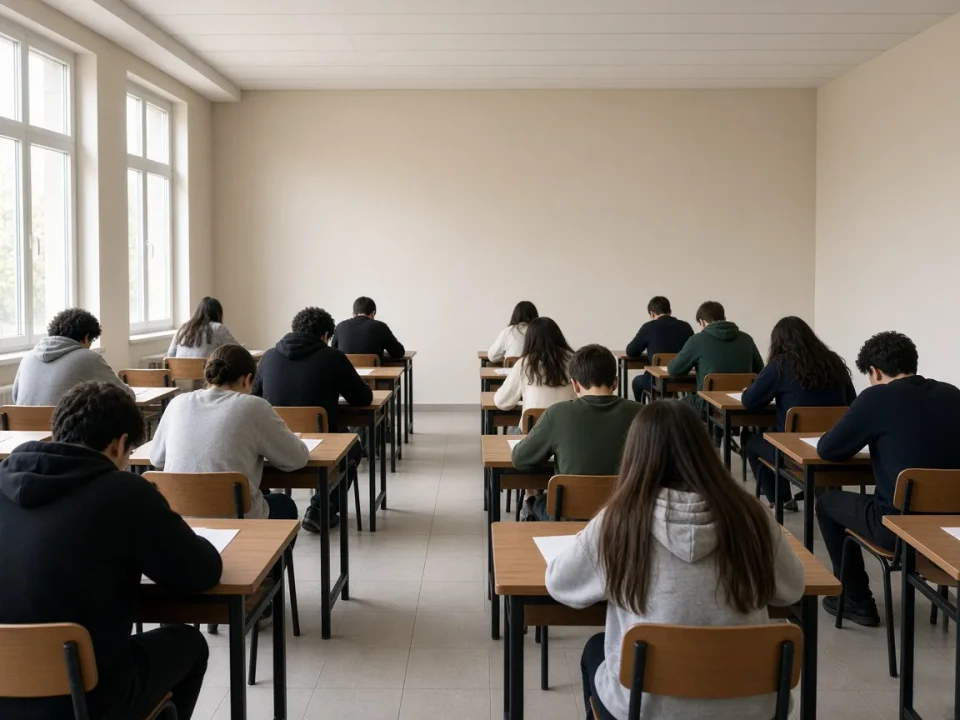
Undergraduates then sit 30 questions in mathematics, geometry and logic, in 60 minutes, on the interview day. Scores are compared inside the field, across health, science, engineering and social sciences. Some lines are in English as well as Turkish, and candidates in the first three are expected to follow them. The paper draws on the home curriculum and the Turkish one. Where applications are numerous, the page names Afghanistan and Sudan and says the Presidency may set 80 to 100 questions. That is a possibility, not a rule that every Afghan candidate sits the long paper. Iran has no separate note.
The interview, in more than 100 countries, usually lasts 15 to 30 minutes: welcome, documents, why you applied, academic knowledge and plans, then your questions. Bring the latest completed certificates. If you have not graduated, YTB’s page says to bring transcripts for the finished years. A selection committee writes the award list afterwards. An invitation is not an award.
The Turkish year, including English-medium programmes
Every award-holder without C1 Turkish must take a one-year Turkish course and reach C1 by the end of that year. The application-steps page includes people placed in English or another language. IELTS or TOEFL may satisfy an English-medium department on the form. It does not cancel the year.
Universities usually teach that year at a centre called TÖMER. The programme says “Turkish language course” and “C1”, not one brand. Ask before you assume a certificate you hold waives the year. The year is not the faculty place, and it is not the residence permit in the student residence guide.
A letter you can defend, and the mistakes that waste the form
Experts read the letter beside the programme list. Write it in the form’s box. There is no scanned essay on the upload list. Name the subject, the study you have already done in it, and what you mean to do with the degree. Mention only activities you can discuss, because the interview checks papers. A letter that only says you like Türkiye does not answer the question. Do not add a programme you would refuse just to fill the 12 choices.
- Paying a person to file a form the sign-in screen tells you to open, free.
- Borrowing dates. The only confirmed general window here is 10 January to 20 February 2026.
- Applying at a level you already study in Türkiye, or for graduate health sciences the full-time page does not cover.
- A percentage that is not on the transcript, a photo older than a year, or a scan that cuts the stamp.
- A doctorate with no proposal, choices the letter cannot join, or a belief that English-medium study cancels the Turkish year.
- A sworn translation, a notary stamp or a health report ordered before any office asked.
- Treating the scholarship form as the university’s application. One does not file the other.
If you are not selected
A refusal, or silence after results, does not close the universities. The scholarship places you. A self-funded file is your application to the university, under the 2026 university guide. YÖK publishes quotas. Each campus publishes dates, tuition and the exam. There is no national self-funded deadline.
State universities and foundation universities, the vakıf universities often called private, do not always want the same exam. From 2024–2025, state universities do not run their own foreign-student exam. A foundation university may still list its own YÖS beside TR-YÖS. SAT, a school average, Iran’s konkur or an Afghan result counts only if that page names it. Floors are in YÖS and other entrance exams in 2026. The shortlist is your first steps toward studying in Türkiye. Education in Türkiye can help you compare programmes. The university admits.
An offer is not a visa or a residence permit. After registration the card is the student residence permit. Persian, Dari or Pashto pages are translated when the university or a migration list asks for Turkish. Translation services prepares that pair once the language and the stamp are named.
A checklist before the window opens
Use the page that is live that week. This order follows the sources above.
- Match level, percentage, age, August graduation and any current Turkish enrolment to the criteria page.
- Read the announcements. If the next call is absent, the usual window is still 10 January to 20 February, last confirmed for 2026.
- Open TBBS yourself. Registration on that screen is free.
- Prepare the passport or identity card, a photo from the last year, the diploma or temporary certificate, and the transcript. Add an exam or language result only if the programme asks.
- For a doctorate, draft the topic and pick a writing sample that is yours. Write the letter to the departments you will rank.
- Submit inside the published dates and keep the confirmation.
- If invited, bring the latest originals, and earlier transcripts if you have not graduated.
- If selected, read that year’s freshers note before any translation or clinic visit, then ask translation services only for pages the embassy or university named.
- If you are not selected, move to the self-funded list, the exam that campus accepts, and the student residence steps after an offer.
Who decides
These pages were read on 24 October 2026. A stipend, an age line or a document list can change before the next call. TürkiyeRota does not file Türkiye Bursları, does not sit on the committee, and does not charge for a submission the programme calls free. Education in Türkiye is for comparing campuses and preparing a self-funded file. Translation waits until an office has named the page.
The programme decides the scholarship. The university decides admission. The consulate decides the visa. The provincial directorate decides the residence permit. A complete form is not an award.
Introductory editorial content for general information, not legal, medical, or tax advice. Confirm current requirements with the relevant authority or provider.